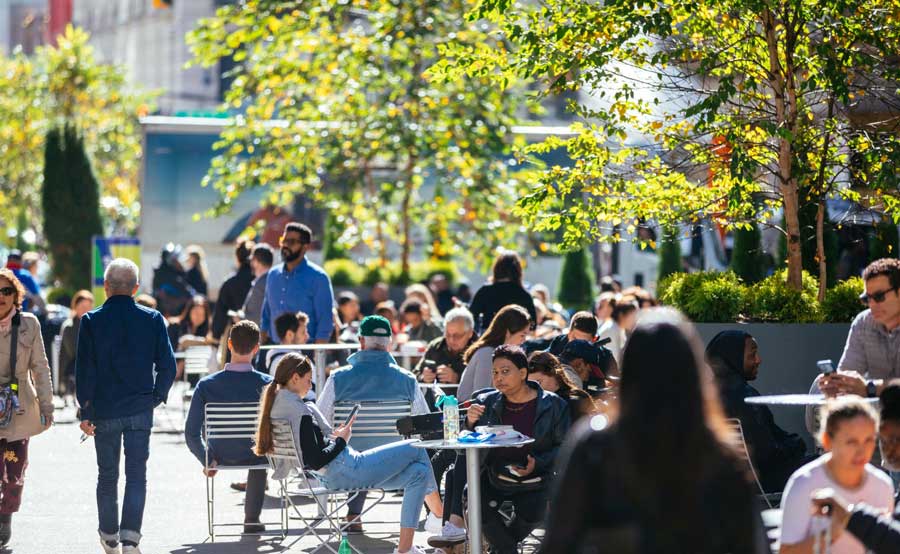
Why the Places We Build Shape How We Treat Each Other
Cities aren't just collections of buildings and roads. They're social ecosystems. The way we design our neighborhoods quietly shapes how we live together and whether we trust one another.
There's a well-established idea in sociology called Social Capital Theory. The short version is simple: when people regularly see others who are different from themselves, casually, informally, without pressure, they begin to care about each other. A nod. A smile. A quick “nice weather today.” Over time, those small, everyday encounters build trust and a sense of shared belonging.
That's how community forms. Not through mandates or slogans, but through repeated, ordinary human contact.
Historically, places with small urban blocks, walkable streets, public plazas, neighborhood shops, and shared recreation spaces created these encounters naturally. You'd see the same people again and again—on the sidewalk, at the park, at the store. You might not know their names at first, but you recognized them. Eventually, some became neighbors, acquaintances, even friends.
In contrast, our modern land-use patterns have prioritized separation: homes far from shops, jobs isolated from neighborhoods, housing sorted by price and type down to remarkably fine levels. We drive alone from one isolated place to another. We interact with fewer people, less often. We spend more time indoors and online, and less time in shared public space.
That physical separation has social consequences.
I saw a different model firsthand while living in Hawaii. In many neighborhoods, large homes and modest cottages sat side by side. Beaches were shared social spaces where people of different incomes, cultures, and backgrounds mixed every day. Over time, you recognized hundreds of people—not by name at first, but by sight. You knew which kids belonged to which families. You even knew whose beach gear belonged to who. You watched out for each other's belongings. Trust emerged naturally, simply because people occupied the same places again and again.
I've seen this same dynamic countless times, in my travels and in shared spaces created by happenstance.
Later, when I studied Social Capital Theory more deeply, it all clicked. Frequent, informal interaction builds the kind of social capital no policy can mandate — but every successful community depends on.
That doesn't mean everyone agrees all the time. Disagreements still happen. But they tend to be more civil. When you expect to see someone again tomorrow, it's harder to reduce them to a stereotype or a single disagreement. You see them as a whole person who belongs.
One of the most influential thinkers on this subject was Christopher Alexander, whose books A Pattern Language and The Nature of Order explored how physical design either strengthens or weakens social bonds. His work, and decades of real-world experience, have shaped how I think about land use and community.
The takeaway is straightforward: If we want stronger neighborhoods, greater trust, and a healthier civic culture, we must design places that bring people together naturally. Not through contrived events or forced programming, but through everyday spaces where interaction happens by default.
The places we build today will shape how we treat each other tomorrow. That's a responsibility we shouldn't take lightly.