What I've Accomplished and Why It Matters
When I decided to run for City Council, I set out with a clear goal: modernize how our city works, especially when it comes to development, redevelopment, and everyday improvements to homes and businesses.
Too often, good ideas stall because outdated rules, slow processes, and rigid systems get in the way. My focus has been to fix that, practically, incrementally, and responsibly.
That work has centered on two key areas: permitting and zoning. Neither is glamorous - but both shape how our city grows, how affordable it is, and how easy it is for people to invest here.
Fixing the Permitting Process
Even before I was elected, one of the most common complaints I heard was frustration with the city's permitting process. Contractors, developers, and homeowners alike described an online system that was slow, confusing, and unreliable - even for professionals who used it regularly.
One major cause was our outdated software. It was clunky, unintuitive, and prone to glitches.
I pushed for change. As a result, the city is now rolling out a new permitting system that is faster, clearer, and easier to use - for large development projects and for residents upgrading their homes or offices.
Why this matters:
- Saves time and money for residents and businesses
- Reduces delays that increase construction costs
- Makes City Hall easier to navigate for everyday people
Efficient government isn't about cutting corners - it's about removing unnecessary friction.
Modernizing Zoning - Incrementally and Intentionally
Zoning is more complicated - but even more important.
After decades of studying city planning, I'm convinced that outdated zoning is one of the biggest obstacles to good development nationwide, not just in Arlington. Our Unified Development Code (UDC) was overdue for reform - but rewriting it all at once would have overwhelmed staff and strained our budget.
So, I took an incremental approach.
Beginning during my time on the Planning & Zoning Commission, I started identifying specific, achievable improvements. Often, that meant simply asking developers to consider doing things differently - and I was encouraged by how many said yes.
Over time, those voluntary improvements became staff recommendations, and in some cases, formal code changes, including:
- Better tree preservation
- Increased site permeability
- Dedicated, well-lit spaces for rideshare, delivery, and on-demand transit
This is how durable reform happens: step by step, building consensus, and turning good practice into policy.
Housing: More Choice, More Flexibility, More Opportunity
I have long advocated for more flexible housing regulations, greater diversity of housing types, and smarter lot configurations. Progress hasn't always been easy - but we've made meaningful gains.
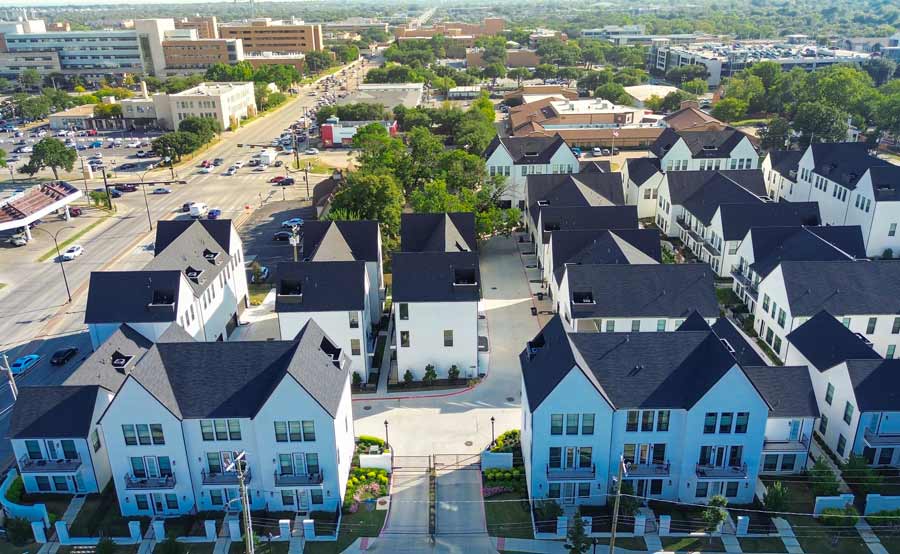
One of the most significant accomplishments was the addition of Cottage Court Zoning to our UDC.
This allows:
- Smaller homes on smaller lots
- Clustered configurations on infill sites or within larger developments
- Elimination of the one-size-fits-all two-car enclosed garage requirement
These changes reduce development costs, unlock challenging infill sites, and - importantly - allow smaller, local developers to compete again.
Why this matters:
- Provides right-sized housing for first-time buyers and downsizers
- Improves affordability for renters and homeowners
- Revitalizes long-dormant, problem properties
- Reduces pressure to consolidate small parcels into large apartment-only projects
- Encourages mixed housing types within the same development
Housing choice is not about forcing change - it's about allowing options.
Commercial Development: Moving Beyond the “Office Park” Model
The same rigidity that has limited housing has also constrained commercial development.
For decades, commercial zoning followed an “office park mentality” - single-use, isolated, and inflexible. Even compatible uses were often prohibited.
I again took an incremental approach, starting with Light Industrial (LI) zoning. Through my advocacy, Arlington adopted a Flex Hybrid LI category, which has quickly become one of our most popular zoning options.
Why this matters:
- Allows compatible office, industrial, and commercial uses to coexist
- Lets businesses adapt as markets change - without costly rezoning
- Reduces overhead and regulatory burden for small businesses
- Encourages mixed-use development on nearby sites
A resilient economy requires zoning that can evolve, not lock businesses into yesterday's assumptions.
Downtown Form-Based Code: A Long-Term Vision, Finally Delivered
I have consistently advocated for Form-Based Code in our downtown and central core. This was a major undertaking - a fundamental shift in how we regulate development - and it could not be rushed.
After years of work, this new code will be adopted in April 2026.
Why this matters:
- Reduces regulatory barriers to downtown redevelopment
- Unlocks value in long-stagnant properties
- Restores a more traditional, walkable downtown form
- Adds diversity to our overall land-use pattern
- Creates options for people who want an urban downtown lifestyle - without changing established neighborhoods
This approach respects choice, context, and character.
The Farmers Market: Small Idea, Big Impact
From my first day on City Council, I advocated for a downtown Farmers Market - even when there was skepticism. Markets have failed before, and staff rightly insisted on research, viable sites, and sustainable business models.
After evaluating many locations, the site north of the railroad tracks near the downtown library - one I consistently supported - was selected.
Looking ahead, I envision a permanent, covered pavilion that can host multiple uses, preserve parking during off hours, and reflect the historic Arlington Train Depot that once stood there.
Why this matters:
- Responds directly to what residents asked for downtown
- Supports nearby businesses and restaurants
- Builds social cohesion through regular, casual interaction
- Encourages “errand bundling” on Saturdays
- Creates opportunities for small growers and food producers
- Expands access to fresh food in a downtown food desert
- Helps transform downtown from quiet to lively
What's Next
My work is far from done. Current and upcoming priorities include:
- Third-party drainage inspections for new developments
- Stronger inspection standards for older apartment buildings
- Continued UDC reforms to reduce barriers to redevelopment and good design
- New and enhanced environmental standards
- Guiding at least four major downtown redevelopment projects - with higher expectations
- Creating a zoning category for Mixed-Use Parking Garages that do more than store cars
- Strengthening connections between UTA, downtown, and the Entertainment District
- Promoting realistic, regionally connected transit solutions
- Expanding Arlington On-Demand and similar services where they make sense
- Advancing policies that strengthen social cohesion across our diverse community
My approach is simple:
Be flexible. Be adaptable. Be scalable.
Fix what's broken, improve what works, and prepare our city not just for today - but for what comes next.